Burst pipe repair starts with one move: shut off the main water valve, then call a plumber to find and replace the split section. In Middleton, Star and Caldwell, most burst pipes come from water freezing in a line that runs through a cold space, such as a crawl space, a garage, an exterior wall or an outdoor spigot.
The good news is that freeze damage is one of the most preventable plumbing problems a homeowner faces. A short fall routine, a few habits during cold snaps and knowing where your shut-off valve sits will stop most frozen pipes before they start, and limit the damage when one does break.
Why pipes freeze and burst in Treasure Valley winters
A pipe bursts because water expands as it turns to ice. Once a plug of ice forms, the water trapped between that plug and a closed faucet has nowhere to go. Pressure climbs in that short section until the pipe or a fitting gives way. That is why the split often shows up a few feet away from the frozen spot, at the weakest joint, rather than right where the ice sits.
Treasure Valley winters are cold enough to do this every year. Under the 1991 to 2020 climate normals published by NOAA’s National Centers for Environmental Information, average January lows in the Boise area sit in the mid twenties Fahrenheit, and Caldwell nights commonly fall into the low twenties during a cold snap. Middleton and Star, set along the Boise River with open farmland around them, see the same pattern.
Two things make a cold night riskier. The first is wind, which pulls heat out of crawl spaces and exterior walls far faster than still air. The second is duration. Utah State University Extension notes that water lines exposed to freezing temperatures for several hours can freeze, and that insulation alone will not protect a pipe through prolonged cold unless there is some source of heat or water flow.
Freeze damage also has a delay built in. A pipe can split while frozen and stay quiet, because the ice seals the crack. The leak only starts when the line thaws, which may be the next afternoon or several days later. Many homeowners discover a burst pipe on the first warm day after a cold spell, not during the coldest night.
Which pipes in your home are most at risk
Freezing happens where a pipe sits outside the heated envelope of the house, or right against its edge. These are the usual trouble spots in Treasure Valley homes:
- Hose bibs and outdoor spigots, plus the short section of pipe just inside the wall behind them
- Crawl space supply lines, especially runs near foundation vents and the access door
- Garage plumbing, including lines to a garage water heater, laundry or utility sink
- Exterior wall lines feeding kitchen sinks, bathroom vanities and laundry hookups
- Attic lines in homes where supply pipe was routed overhead
- Private sprinkler lines that were not blown out after the irrigation season ended
Kitchen sinks on outside walls are a classic case. The cabinet doors stay closed, the pipes sit in a pocket of cold air against the wall, and the line freezes even though the kitchen itself feels warm.
Hot water lines freeze too. People assume the hot side is safe, but a hot line that sits unused overnight cools to the temperature around it, and it can freeze as easily as the cold side.
How home age changes freeze risk in Middleton, Star and Caldwell
The three towns share a climate, but their housing is quite different, and that changes what tends to fail.
Middleton and Star: newer homes, different weak points
Homes in Middleton and Star are some of the newest in the Treasure Valley. Census Bureau survey data puts the median home in Middleton at around 2009 and in Star at around 2011. Most of these houses were plumbed with PEX, a flexible plastic supply pipe. PEX handles a freeze better than copper or galvanized steel because it can stretch a little as ice forms. It is not freeze-proof, though. Repeated freezing can still split it, and the brass or plastic fittings that join PEX runs are common failure points because they cannot flex.
Newer homes have other habits worth knowing about. Many have frost-free hose bibs, which shut off the water further inside the wall where it stays warm. They only work when the hose is disconnected. A hose left attached through the first hard freeze traps water inside the valve body, and the bib can crack inside the wall, out of sight. That crack often goes unnoticed until spring, when the first person to turn on the spigot sends water into the wall cavity or crawl space.
If you live in a newer Middleton or Star home, the first winter after the builder warranty ends is a good time to look at how your outdoor faucets and crawl-space lines are protected.
Caldwell: a mix of new subdivisions and older neighborhoods
The median home in Caldwell dates from around 2003, so much of the city has the same modern plumbing as its neighbors. The older neighborhoods near downtown, Indian Creek Plaza and the College of Idaho are different. Some houses there still have galvanized steel supply pipe, which rusts from the inside, and older crawl spaces with gaps, uninsulated runs and vents that let wind straight in.
Galvanized pipe that has corroded for decades has thinner walls, so a freeze that a newer line would survive can split it. When a galvanized section bursts, it is often a sign that more of the line is near the end of its life. That is a conversation to have with the plumber during the repair, not a decision to rush.
Signs a pipe is frozen or has already split
Catching a frozen pipe before it thaws gives you the most control. Watch for these signs on cold mornings:
- A faucet that gives a trickle or nothing at all, while other fixtures run normally
- A toilet that refills slowly or not at all after a flush
- Frost on an exposed pipe in a crawl space or garage
- A bulge or visible crack along a section of pipe
Once a split pipe thaws, the signs change. You may hear running water when nothing is on, see a wet spot on a ceiling or wall, notice damp drywall near a hose bib, or find water pooling in the crawl space. The water meter is the clearest test. Turn off every fixture and appliance that uses water and watch the meter. If it keeps moving, water is escaping somewhere.
What to do in the first minutes after a pipe bursts
Speed matters more than anything else here, and the order matters too. Work through these steps:
- Shut off the main water valve. In many homes it sits near the water heater, in a utility closet, in the garage, or where the service line enters the house. Turn it fully closed.
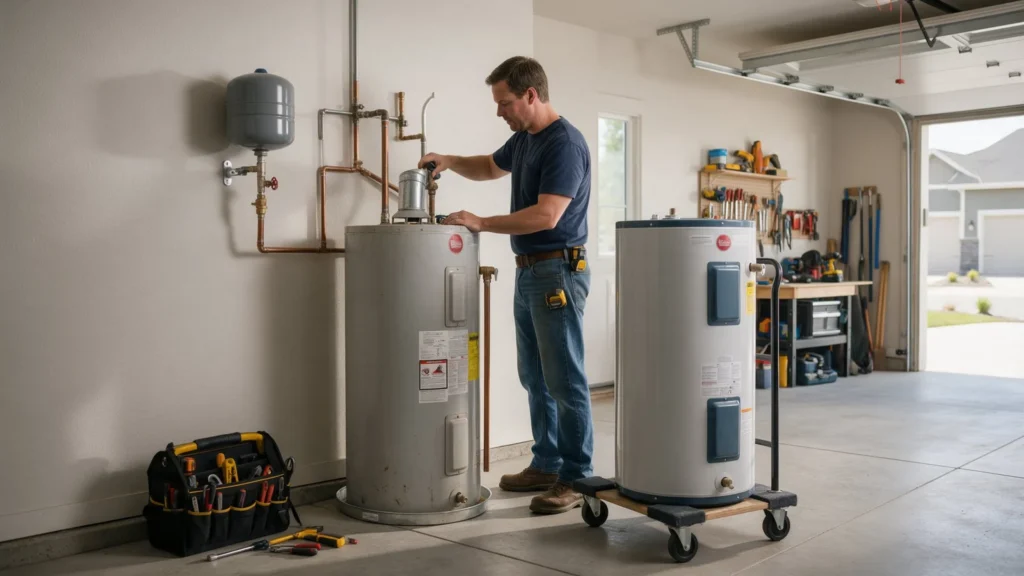
- Turn off the water heater if hot water lines are involved or the house will be without water for a while. Switch off the power on an electric unit, or set a gas unit to its pilot or off setting.
- Cut power to wet areas. If water is near outlets, a panel or appliances, switch off those circuits at the breaker, and only if you can reach the panel without standing in water.
- Open a faucet at the lowest point in the house to drain water left in the lines and take pressure off the system.
- Move belongings out of the way and start removing standing water with towels, buckets or a wet vacuum.
- Take photos and short videos of the break and the affected areas before cleanup goes too far. Your homeowners insurance company will want to see them if you file a claim.
- Call a plumber and describe where the water came from, what type of pipe you think it is, and whether you have shut off the main.
Utah State University Extension recommends teaching every adult and older child in the house where the main shut-off is and how to close it. It takes a minute to show someone, and it is the single habit that limits damage the most when nobody else is home.
Temporary patches, such as a rubber sheet held with hose clamps, a repair clamp or epoxy putty, can slow a small leak on an exposed pipe. Treat them as a way to keep water on until the repair, not as the repair itself. Water pressure works on them constantly, and they rarely last.
How to thaw a frozen pipe that has not burst
If a line is frozen but you see no split, you can often thaw it safely. Utah State University Extension’s advice to prevent frozen pipes lays out a careful sequence. Open the faucet that the frozen line feeds, so melting water has somewhere to go. Start warming the pipe at the faucet end and work back toward the frozen section. Raise the temperature gradually with a hair dryer, a space heater kept at a safe distance, a heat lamp, or towels soaked in hot water.
A few rules keep this safe:
Never use an open flame or a torch. It is a fire risk inside walls and crawl spaces, and it can damage the pipe. Avoid boiling water, which can crack a cold fitting. Keep electrical tools away from standing water. Keep buckets ready, because a pipe that looked intact can start leaking as the ice melts.
Stop and call a plumber if you cannot find the frozen section, if it sits inside a finished wall or ceiling, or if you notice any water once it starts to thaw. A frozen pipe you cannot reach is not a job for a hair dryer pointed at drywall.
How burst pipe repair works
A plumber’s first task is finding every damaged spot, not just the obvious one. Freeze damage often affects more than one point on the same line. A second split may stay hidden behind a wall until the water is turned back on. When the damage is out of sight, pipe leak detection methods help narrow it down. A pressure test isolates sections of plumbing to show which line is losing water. Thermal imaging can show a cold or wet pattern behind drywall. Acoustic tools listen for the sound of escaping water. Together they let the plumber open the wall only where the pipe actually failed.
The repair itself depends on the pipe material:
PEX. The split section is cut out and a new piece is joined with fittings. If a fitting failed rather than the pipe, the fitting is replaced. Copper. The damaged section is cut out and replaced, with soldered, press or push-fit joints depending on access. Galvanized steel. A burst section can be replaced, but corroded galvanized pipe often leads to a discussion about replacing more of the line, because nearby sections are usually in similar shape.
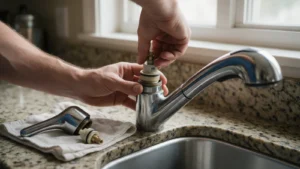
Outdoor faucets get their own fix. A cracked hose bib is usually replaced, and swapping an older standard spigot for a frost-free sillcock is a common upgrade at the same visit. Damaged indoor taps and shut-off valves can be handled through faucet repair.
Once the repair is in, the plumber restores water slowly and checks the new joints under full pressure. Check the joints again the next morning; a slow weep shows on a dry paper towel before it leaves a stain.
What affects the scope and cost of a burst pipe repair
There is no single figure that fits every burst pipe. A plumber gives the actual quote after seeing the damage. These are the factors that change the size of the job:
- Access. A split pipe in an open crawl space or garage is far simpler to reach than one inside a finished wall, ceiling or tight crawl space.
- Number of breaks. One split is one repair. Several breaks along a line, which is common after a long freeze, add time and material.
- Pipe material and condition. Modern PEX and copper are usually repaired section by section. Corroded galvanized pipe may call for a longer replacement.
- Finding hidden damage. When the leak location is not obvious, leak detection is part of the job.
- Outdoor fixtures. Replacing a cracked hose bib or upgrading to a frost-free model adds a separate item.
Opening a wall to reach a pipe also leaves drywall, insulation and paint to put back afterward. That finish work is a separate job from the plumbing repair. Ask the plumber how large an opening they expect to make so you can plan for it.
When you call, it helps to say whether you can see the break, what floor or room it is near, and whether the water is off. If you are comparing who to call, the questions in our guide on how to choose a plumber in Caldwell apply here too.
A fall freeze-prevention checklist for Treasure Valley homes
Most frozen pipes are prevented in October and November, not in January. Work through this list once the irrigation season ends and before the first hard freeze:
- Disconnect every garden hose, drain it and store it, so water can empty out of the hose bib
- Shut off any indoor valves that feed outdoor faucets, then open the outside spigot to drain the line
- Have private sprinkler lines blown out, and close your own irrigation shut-off valve
- Fit foam pipe insulation on exposed supply lines in crawl spaces, garages and unheated rooms
- Add heat cable made for pipes on any run that has frozen before
- Seal gaps where pipes pass through exterior walls and foundations
- Close crawl space vents and the access door before cold weather sets in
- Find your main shut-off valve, make sure it turns, and show the household where it is
Irrigation deserves a note of its own in Caldwell. The Caldwell Municipal Irrigation District states that it does not blow out private irrigation lines, so homeowners need a company or landscaper to do it. The district also asks residents not to close the city’s curb stop valve to winterize, but to close their own shut-off valve instead, and to make sure the hose bib is closed. Homeowners in Middleton and Star with their own pressurized irrigation should plan for the same blowout before the first freeze.
Ready.gov’s winter weather guidance puts pipe protection in the same list as insulation, caulking and weather stripping. That fits how freezing works. Sealing drafts around the rim joist and foundation keeps crawl-space pipes warmer than any single product.
Cold-snap habits and leaving home in winter
When a hard freeze is in the forecast, a few small changes protect the riskiest lines. Open cabinet doors under sinks on outside walls so room heat reaches the pipes. Keep the garage door closed if plumbing runs through the garage. Keep the thermostat at a steady setting day and night instead of dropping it sharply overnight.
Letting a faucet drip is the habit people argue about most. Moving water is harder to freeze, and a slightly open faucet also relieves the pressure that splits a pipe. Utah State University Extension points out that it wastes water, though, and treats it as a fallback for lines that cannot be protected another way. A sensible middle ground is to drip only the faucets on exterior walls that have frozen before, and only on the coldest nights.
Winter travel calls for more care. Leave the heat on at a moderate setting rather than turning it off. Utah State University Extension suggests that if you will be away for an extended stretch, the safest approach is to turn off the water, shut down the water heater and drain the plumbing. For shorter trips, at minimum shut off the main water valve before you leave. A pipe that bursts with the main off releases only the water left in the lines, not a steady flow for days.
Frequently asked questions
Can PEX pipe burst from freezing?
Yes. PEX tolerates a freeze better than copper or galvanized pipe because it can stretch a little, but it can still split, especially after repeated freezes. Fittings that join PEX runs are a common failure point because they cannot flex.
Will a frozen pipe thaw on its own?
It usually will once temperatures rise, but slow thawing gives you no control over when a hidden split starts leaking. Open the faucet on that line and warm the pipe gently from the faucet end so you can watch for leaks as it thaws.
How do I know if a pipe burst inside a wall?
Look for damp or stained drywall, bubbling paint, a sound of running water with everything off, or a water meter that keeps moving when no water is in use. If you see any of these, shut off the main and have the line checked.
Should I shut off water to my outdoor faucets for winter?
If your home has indoor shut-off valves for the outdoor faucets, close them and drain the outside spigot. Frost-free hose bibs usually do not need a separate shut-off, but the hose must be disconnected for them to drain.
Getting a frozen or burst pipe fixed
Freeze damage in the Treasure Valley follows a pattern. Cold air finds pipes at the edges of the house, ice traps pressure, and the leak waits for the thaw. A fall routine and a known shut-off valve take care of most of it. When a pipe does split, the job is to stop the water, find every damaged spot and repair it with the right material for your home.
Frozen pipes hit the whole valley, so a plumber in Caldwell also answers burst pipe calls from Emmett, Nampa and Eagle.
If a pipe has frozen or burst in Middleton, Star or Caldwell, shut off the main and call (208) 802-8323 to arrange burst pipe repair. You will be connected with a local plumber, and hidden leaks behind walls or under floors can be traced through pipe leak detection.