To choose a plumber in Caldwell, describe the problem clearly, confirm the plumber holds a current Idaho plumbing license, and ask how they will diagnose the issue and price the work before anyone starts. A plumber who answers those questions plainly, puts the estimate in writing, and knows how local homes are built is usually a safe choice.
The rest comes down to fit. A plumber who suits a clogged kitchen drain in a newer subdivision may not be the right call for an old sewer lateral near downtown. This guide covers what to have ready when you call, the questions worth asking, the warning signs to walk away from, and why the age of your home and the local water change the conversation.
What should you have ready before you call a plumber?
A clear description is the single most useful thing you can bring to the first call. It helps the plumber judge how serious the problem is, which tools and parts to bring, and whether the job needs one visit or two. It also makes it easier to compare answers if you speak with more than one plumber.
Before you pick up the phone, try to note the following:
- What you see, hear or smell. Water on the floor, a gurgling drain, a hissing sound in the wall, or a sewer odor all point in different directions.
- Where it is happening. Name the room and the fixture, and say whether it is upstairs, on the main floor or in a crawl space.
- How many fixtures are affected. One slow sink is usually a local clog. A toilet, tub and floor drain backing up together usually means the main line.
- When it started. Say whether it came on suddenly or has been getting worse for weeks.
- What you have already done. Mention whether you shut off the water to the fixture or the whole house, used a plunger, or poured in a drain cleaner.
- The age of the home. A rough build year tells the plumber what kind of pipe to expect.
- Your address. This confirms the plumber works in your part of town.
Photos help as much as words. A picture of the label on a water heater, the model number under a faucet, or the stain on a ceiling can answer questions before the visit. If you smell gas, leave the house and call your gas utility first. Gas leaks are an emergency for the utility, and a plumbing call comes after it is safe.
How do plumbing licenses work in Idaho?
Plumbing in Idaho is a trade that requires a state license. The Idaho State Plumbing Board, part of the Division of Occupational and Professional Licenses (DOPL), issues the licenses and handles the permits and inspections that go with plumbing work. Knowing how the system is set up makes it easier to ask the right question.
DOPL lists several license classes for plumbing. An apprentice is in training and works under supervision. A journeyman has completed training and can do the work. A plumbing contractor license is held by the person or business that contracts for jobs and is responsible for them. There are also specialty classes for people who do a narrower range of plumbing work. Contractor and journeyman licenses run on a three-year term, so a license that was current a few years ago may not be current now.
Three DOPL tools matter most to a homeowner:
- License search. DOPL runs a public search where you can look up a person or business by name or license number and see the license type and status.
- Complaints. The board takes complaints against licensees through its online services portal.
- Permits and inspections. Plumbing permits can be purchased through DOPL, and inspections are requested through the same online system.
Asking a plumber for their license number is normal and polite. Any plumber working legally in Idaho expects the question. Write the number down, check it in the DOPL search, and confirm that the name matches the person or company you are hiring. While you are at it, ask what liability coverage the business carries for damage to your home during the job.
What questions should you ask a plumber before you book?
You do not need to know plumbing to ask good questions. The aim is to understand how the plumber works, what you are paying for, and what happens if the job turns out bigger than expected.
How will you find the cause?
Diagnosis is where a good repair starts. For a drain that keeps clogging, ask whether a camera inspection is part of the plan if clearing it once does not solve the problem. For a hidden leak, ask how the plumber will find the source without opening more wall or floor than necessary. Professional pipe leak detection uses methods such as listening equipment, thermal imaging and pressure tests to narrow the search first.
How is the price put together?
Ask whether you will see the price before work begins, whether the first visit or diagnosis is charged separately, and whether the quote covers both parts and labor. Ask what happens if the plumber opens a wall or pulls a fixture and finds more damage. A clear answer sounds like “I will stop, show you, and give you a revised price before going further.”
What are my options?
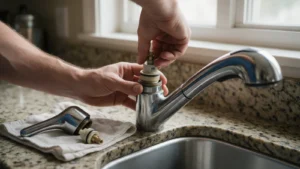
Many plumbing jobs have more than one path. A water heater can be repaired or replaced. A damaged sewer line can sometimes be fixed in one section rather than replaced end to end. A dripping faucet may need a cartridge or a whole new fixture. A plumber should be able to explain the trade-offs in plain terms, including how long each option is likely to last.
Who will do the work?
The person you speak with may not be the person who arrives. Ask who will do the work, what license they hold, and whether an apprentice will be working under a journeyman on site. That is normal in the trade, and a straight answer is a good sign.
Does this job need a permit and inspection?
Some plumbing work, such as replacing a water heater or working on a sewer line, typically involves a permit and an inspection. Ask whether your job needs one and who will pull it. The plumber doing the work should handle the permit. A plumber who asks you to get it yourself is a warning sign, which the next sections explain.
What coverage comes with the work?
Ask what happens if the repair fails, how long the workmanship is covered, and whether the parts carry a separate manufacturer warranty. Get the answer in writing on the estimate or invoice so there is no confusion later.
How do you read a plumbing estimate?
A written estimate protects both you and the plumber. The Federal Trade Commission’s home improvement guidance says a written estimate should describe the work to be done, the materials, the completion date and the price. For larger jobs, the FTC also recommends a written contract that lists the contractor’s name, address, phone number and license number, along with start and finish dates.
When you compare estimates, check that they cover the same scope. One plumber may include hauling away an old water heater, a new expansion tank and permit fees, while another lists only the heater and labor. The lower number is not always the lower bill. The FTC advises against automatically choosing the lowest bid and suggests asking about large differences between quotes.
A few payment habits help too:
- Do not pay the full amount up front for a large job.
- Make the final payment only after the work is finished and you have checked it.
- Make sure every blank space on a contract is filled in or crossed out before you sign.
- Get any verbal promises, such as cleanup or haul-away, written into the estimate.
If you sign a contract in your home rather than at the business’s permanent location, federal guidance says the contract should include a written statement of your right to cancel within three business days. Ask about it if it is missing.
What are the warning signs to walk away from?
Most plumbing jobs go smoothly, but home repair scams exist, and they tend to follow a pattern. The FTC lists several warning signs that apply to plumbing as much as to roofing or paving. Be cautious if someone:
- Knocks on your door saying they are working in the area and noticed a problem
- Offers a deal on materials left over from another job
- Pressures you to decide on the spot
- Wants full payment up front or accepts only cash
- Asks you to pull the permit yourself
- Pushes you toward a lender they know to finance the job
The permit request deserves extra attention. When the homeowner pulls the permit, the homeowner takes responsibility for the work in the eyes of the inspector. A plumber who avoids pulling permits may be avoiding inspections, a license check, or both.
Another quieter warning sign is a diagnosis without a look. A plumber can often give a likely cause over the phone, but a firm price for a sewer line or a slab leak before anyone has seen the pipe should make you ask more questions.
Why does the age of a Caldwell home matter when hiring a plumber?
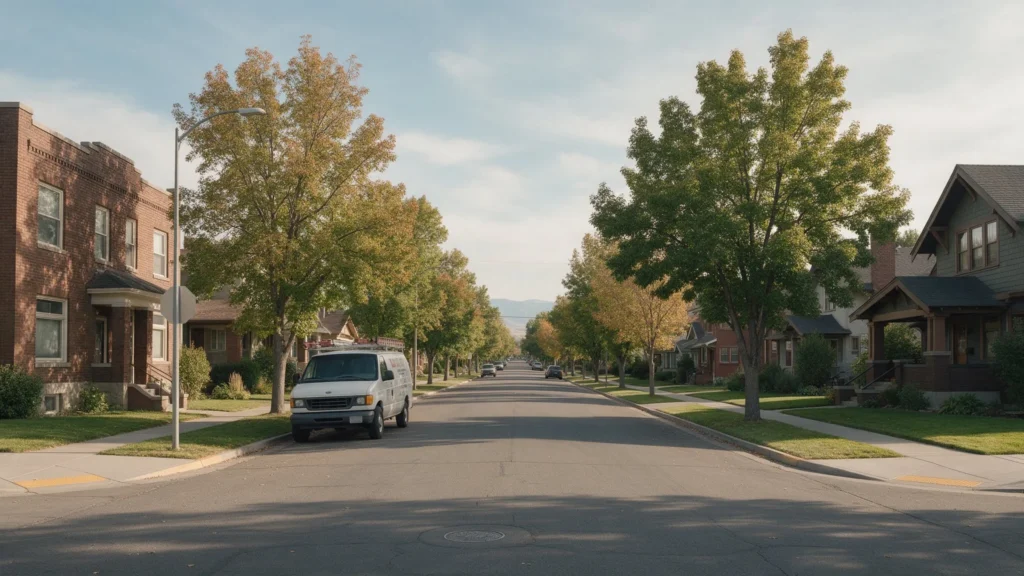
Caldwell has two very different kinds of housing, and the right questions depend on which one you live in. Much of the city was built during the growth of the past few decades. Those homes usually have PEX supply lines and PVC drains, and the common calls involve water heaters reaching the end of their life, fixtures, and leaks at fittings.
The older neighborhoods near downtown, Indian Creek Plaza and the College of Idaho are another matter. Some houses there still have galvanized steel supply pipe, which narrows from the inside with rust and scale until water pressure drops. Sewer laterals in older homes may be clay or cast iron, and clay pipe joints are a common entry point for tree roots. Some post-war homes have Orangeburg pipe, a tar and fiber material that softens and deforms with age.
If you live in an older home, ask whether the plumber works on these materials often and how they check the condition of a line before recommending a repair. Sewer line services for older laterals usually begin with a camera inspection, because the footage shows whether one section needs repair or the whole run needs replacing. Older homes also tend to have crawl spaces and exposed pipe that are prone to freezing, which our guide to frozen and burst pipes in Middleton, Star and Caldwell covers in detail.
In a newer home, ask different questions. Was the problem there from the start, or did it appear recently? Is the water heater the original unit? Has anything been changed since the builder finished? Problems that show up in the first years of a home’s life often trace back to installation details, and a plumber who sees a lot of newer homes will recognize them.
How does Caldwell water affect plumbing work?
Caldwell’s water is part of almost every plumbing conversation in town. According to the City of Caldwell 2025 water quality report, the city supplies water from 15 groundwater wells across four pressure zones. The water meets federal and state standards, but the report notes it contains low levels of arsenic. The highest arsenic result was 9.24 parts per billion against a federal limit of 10, with results between 3.90 and 9.24.
That matters when you hire a plumber for two reasons. First, many Caldwell households add drinking water treatment such as an under-sink reverse osmosis filter, and a plumber can set up the connections for one. Second, the minerals in the groundwater leave scale inside water heaters, faucet cartridges, toilet valves and shower valves. A plumber who works locally will usually ask about scale when diagnosing a weak water heater or a dripping tap.
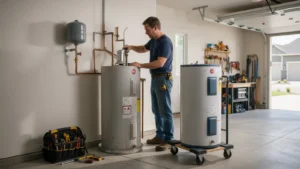
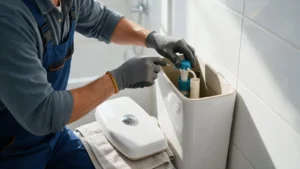
If you are calling about water heater repair, mention how old the unit is, whether it is gas or electric, and whether the tank has ever been flushed. Sediment from hard water is one of the most common reasons a tank starts rumbling or runs out of hot water early. The same scale wears out toilet parts, which our post on toilet repair in Caldwell explains.
How do you choose a plumber when the problem is urgent?
An urgent leak or backup is when people are most likely to hire the first name they find. You can still make a good choice under pressure if you take a few steps in order.
First, stop the damage. Shut off the main water valve for a supply leak, or stop running water if drains are backing up. Second, take photos of the problem and any water damage, which helps both the plumber and any insurance claim. Third, make the call and ask the short version of the questions above: the license number, how the price is set, and what the first visit includes.
Urgent work often costs more than planned work, because it happens on the plumber’s schedule rather than yours. That is a good reason to find a plumber you trust before you need one. A routine job such as a water heater flush or a running toilet is a low-stakes way to see how a plumber communicates, explains options and cleans up.
What plumbing help can you get through this service?
Calling (208) 802-8323 connects you with a local plumber who works in Caldwell and the surrounding Treasure Valley. The work covered includes drain cleaning, water heater repair, sewer line services, toilet and faucet repair, and pipe leak detection. Sewer line work covers homes connected to city sewer. Septic systems are not covered and need a septic specialist.
You can see the full list on the plumbing services page, and details on the area are on the Caldwell service area page.
Frequently asked questions
How do I check a plumber’s license in Idaho?
Use the public license search on the DOPL website. Search by the plumber’s name, business name or license number, and check that the license type is current and matches the person doing the work.
What is the difference between a journeyman and a plumbing contractor?
A journeyman has finished training and can do plumbing work. A plumbing contractor license covers the person or business that contracts for jobs and takes responsibility for them. On many jobs, both are involved.
Should I get more than one quote?
For larger jobs such as sewer line replacement or a new water heater, comparing quotes is reasonable. Make sure each quote covers the same work, parts and permit before you compare the totals.
Is a phone quote reliable?
A phone conversation can narrow down the likely cause and give a rough idea of the job. For anything hidden, such as a sewer line or a leak under a slab, the firm price usually comes after the plumber has seen it.
Book with confidence
When you are ready, call a plumber in Caldwell, ID you can vet with the questions above. We also serve homes in Nampa, Meridian and Garden City.
Hiring well comes down to a clear description, a license you have checked, an estimate in writing and a plumber who explains your options without pressure. Caldwell’s mix of older and newer homes, and its hard groundwater, make local knowledge worth asking about on every job. If you are ready to talk through a plumbing problem, call (208) 802-8323 to be connected with a local Caldwell plumber, or browse the plumbing services available across the Treasure Valley.