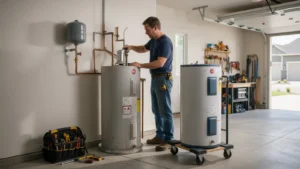
Water heater replacement cost in Caldwell is set by the job, not just the box. The heater type, its fuel, the size your household needs, how it vents, where it sits and what has to be brought up to current code all change the final number. The only figure you can rely on is a written quote from a plumber who has looked at your setup.
That is why this guide does not list prices. It explains what pushes a replacement up or down, how Caldwell’s hard water shapes the decision, and which questions turn a vague estimate into a clear, comparable quote.
Repair or replace: how to tell which one you need
Many water heater problems are parts problems. A gas pilot that will not stay lit, a worn thermocouple, a burned-out electric element, a faulty thermostat or a dripping drain valve can usually be fixed, and water heater repair puts the heater back in service for far less disruption than a swap.
Replacement becomes the real conversation in three situations:
- The tank itself is leaking. Water seeping from the steel shell or the bottom seam means the tank has corroded through. No part fixes that.
- The hot water is rusty or smells metallic, and flushing does not clear it. That often points to corrosion inside the tank.
- The heater is near the end of its expected life and needs a major repair, such as a gas control valve or repeated element failures.
Age is the fastest filter. The U.S. Department of Energy’s Energy Saver guide says most storage water heaters last 10 to 15 years, while tankless units can last more than 20 years. Treat those as upper ranges for a home on hard water, which is the case for most of Caldwell. If you do not know your heater’s age, the serial number on the label usually encodes the month and year of manufacture. A plumber can read it in seconds.
A practical rule many homeowners use: if the heater is past roughly two thirds of its expected life and the repair is a significant one, put the repair money toward a replacement instead. Ask the plumber to price both so you can make that call with real numbers.
Why Caldwell’s hard water shortens tank life
Caldwell’s water supply shapes how long a water heater lasts here. According to the City of Caldwell’s annual drinking water report, the city draws its water from 15 deep groundwater wells. Groundwater picks up dissolved calcium and magnesium as it moves through rock and soil, and that mineral content is what makes water hard.
Heat pulls those minerals out of solution. In a tank heater, they settle as a layer of sediment on the bottom. On a gas unit, that layer sits between the burner and the water, so the burner runs longer to heat the same tank, and trapped water under the scale boils in small bursts. That is the rumbling or popping sound many Caldwell homeowners hear. On an electric unit, scale coats the lower heating element until it overheats and burns out.
The anode rod takes the other hit. This sacrificial metal rod corrodes on purpose so the steel tank does not. Mineral-rich water uses it up faster, and once it is gone, the tank wall starts to corrode. A tank that has been flushed and had its anode checked will usually outlast one that has been ignored, which matters when you are deciding whether a ten-year-old heater has another few years in it.
Neighboring towns face the same issue in different degrees. The City of Meridian’s 2025 water quality data puts its system average at 9.19 grains per gallon of hardness, with individual pressure zones ranging from 6.97 to 10.53. Homes in Meridian and across the valley see the same sediment and scale patterns described here.
What drives water heater replacement cost
Two replacements on the same street can be priced very differently. These are the factors a plumber weighs when building a quote:
- Heater type. A like-for-like tank swap is usually the most contained job. Moving to tankless or a heat pump model changes the gas, venting, electrical or space requirements.
- Fuel. Staying with the same fuel reuses existing connections. Switching from electric to gas means a gas line, and switching from gas to electric may mean a new circuit or a panel upgrade.
- Capacity and output. A larger tank or a higher-output tankless unit costs more to buy and can need larger connections.
- Venting. Gas heaters must exhaust safely. Some newer models vent through a wall with plastic pipe instead of using the old metal flue.
- Location and access. A heater in an open garage is easier to remove and replace than one in an attic, a tight closet or a crawl space.
- Code and safety items. An expansion tank, a new relief valve discharge line, a drain pan or a sediment trap on the gas line may be needed to meet current requirements.
- Removal and permits. Hauling away the old heater and any required permit and inspection are included in some quotes and listed separately in others.
Labor, materials and code work all add to the price of the unit itself, which is why the same model can be quoted very differently from one house to the next.
Tank, tankless or heat pump: how the type changes the job
A conventional storage tank keeps a set volume of water hot and ready. It is the most common type of residential water heater, it is familiar to every installer, and replacing one with a similar unit rarely changes the plumbing around it. The tradeoff is standby heat loss, since the tank keeps reheating water whether you use it or not, and a limited supply during back-to-back showers.
A tankless heater heats water only when a tap opens. The Department of Energy’s Energy Saver guide reports that for homes using 41 gallons or less of hot water a day, on-demand heaters can be 24% to 34% more energy efficient than conventional storage tanks, and 8% to 14% more efficient for homes using around 86 gallons a day. Those savings come with installation demands. Gas tankless units need a gas supply sized for a much higher burner input than most tanks, which can mean a larger gas line from the meter. Whole-house electric tankless units can draw enough current to require a service upgrade. In hard water, a tankless unit also needs regular descaling, because scale collects in the narrow passages of its heat exchanger.
A heat pump water heater moves heat from the surrounding air into the water instead of creating heat directly. The same DOE guide says these units can be two to three times more energy efficient than conventional electric water heaters. They need room around the unit for air flow, a condensate drain, and a space that stays within the temperature range the manufacturer specifies. A cramped closet is often a poor fit.
Water heating is the second largest energy expense in a typical home, about 18% of energy use according to the DOE. That makes the choice of type a long-term decision, not just an installation question. Weigh how long you plan to stay in the home against the added work some types require.
Sizing the new heater to your household
Bigger is not automatically better. An oversized tank wastes energy keeping extra water hot, and an undersized one runs out halfway through the second shower.
For tank heaters, the key number is the first-hour rating, printed on the yellow EnergyGuide label. It tells you how many gallons of hot water the heater can deliver in an hour starting with a full tank. Estimate your busiest hour, for example two showers, a dishwasher cycle and a load of laundry on a weekday morning, and choose a unit whose first-hour rating covers it.
For tankless heaters, sizing depends on flow rate and temperature rise. Flow rate is the gallons per minute of every fixture you might run at once. Temperature rise is the difference between the incoming groundwater temperature and the temperature you want at the tap. Incoming water is colder in winter, so a tankless unit that keeps up in July may fall short in January. A plumber can size the unit for the coldest months rather than the average.
If your household has changed since the old heater went in, mention it. A new baby, a teenager who takes long showers or a basement suite with its own bathroom all shift the right size.
The parts of the job you do not see
Some of the most important work in a replacement happens around the heater, not inside it. These items rarely show up when you compare models online, yet they affect safety, code compliance and how long the new unit lasts.
Expansion tank. When water heats, it expands. In homes with a check valve or pressure reducing valve on the main line, that extra volume has nowhere to go, and pressure spikes every time the heater runs. A small expansion tank on the cold supply absorbs it and takes strain off the relief valve, fittings and fixtures.
Temperature and pressure relief valve and discharge line. Every tank heater has a relief valve that opens if temperature or pressure climbs too high. The discharge pipe must run to a safe location and be the correct size and material. Older installations sometimes fall short.
Venting. A gas heater’s flue must draft properly so combustion gases leave the house. A new heater may need a new vent connector, a different vent size, or a different venting method entirely.
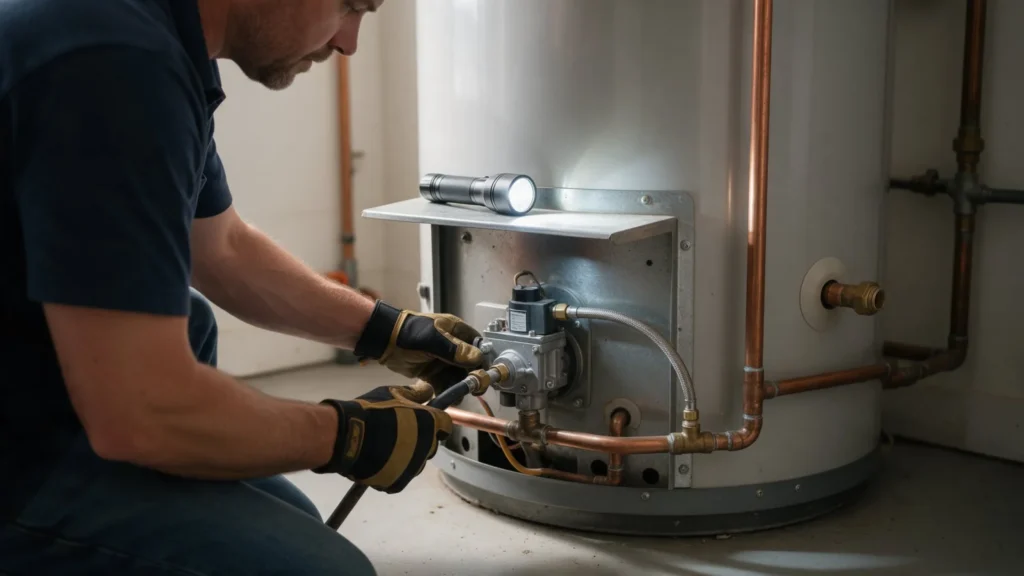
Gas connection. Gas units typically need a shutoff valve and a sediment trap ahead of the control valve. A switch to a higher-input appliance may require checking whether the existing gas line can carry the load.
Drain pan and placement. A pan under the heater with a drain line protects floors and finished spaces from a future leak. In a garage, gas units are often raised off the floor.
Permit and inspection. Requirements depend on the work and the jurisdiction. Ask whether a permit applies to your job and who arranges the inspection.
How to compare water heater replacement quotes
A useful quote spells out the scope, not just a total. When you talk to a plumber, ask:
- What model and capacity are you recommending, and why that size for our household?
- Does the price include removal and disposal of the old heater?
- Which code items are included: expansion tank, relief valve line, venting changes, drain pan, gas or electrical work?
- Is a permit needed, and is the fee included?
- What does the manufacturer’s warranty cover on the tank and parts, and what maintenance does it require?
- What maintenance will this unit need in our water, and how often?
If you are weighing tank against tankless, ask for both options in writing. Comparing two detailed scopes side by side shows where the price difference actually comes from.
It also helps to mention anything odd you have noticed. Water on the floor near the heater can come from the heater or from a supply line nearby. A heater that seems to run nonstop can point to a hidden hot water leak under the floor, and pipe leak detection should come before a new heater goes in. The signs of a leak under concrete are covered in our guide to slab leak repair.
Making a new heater last in Caldwell water
Maintenance does more to stretch a heater’s life in hard water than almost anything else. The DOE recommends setting the water heater thermostat to 120°F, a temperature considered safe for most people, and draining a quart of water from the tank every three months to remove sediment, following the manufacturer’s directions. Many plumbers also suggest a full flush once a year in hard-water homes.
Ask the plumber to show you the drain valve and the anode rod location when the new heater goes in. Checking the anode every few years, and replacing it before it is fully consumed, protects the tank lining. For tankless units, a descaling flush on the schedule the manufacturer recommends keeps the heat exchanger clear.
Some Caldwell households add a water softener to slow scale buildup. If you have one or plan to install one, tell the plumber, since softened water can change how fast the anode wears.
Water heater replacement FAQ
Can I keep using a leaking water heater until the new one is installed?
If the leak is coming from the tank body, close the cold water valve on top of the heater and turn off the gas or the breaker. A tank that has started leaking can fail further without warning. Leaving it off until the replacement is safer than running it.
Is a bigger tank always the safer choice?
No. A tank larger than your household needs costs more to buy and keeps extra water hot around the clock. Size the heater to your busiest hour of hot water use using the first-hour rating, and adjust only if your household is growing.
Does a new water heater need a permit in Caldwell?
It depends on the work involved, such as gas, venting or electrical changes. Ask the plumber whether a permit and inspection apply to your job and whether they are part of the quote.
Get a water heater replacement quote for your home
A replacement goes smoothly when the scope is clear before work starts: the right type and size, the code items your house needs, and a plan for maintenance in hard water. A plumber who sees the heater in person can price all of that accurately.
Looking for a plumber in Caldwell, ID to quote a new water heater? The same help covers homes in Nampa, Boise and Emmett.
If your heater is leaking, aging or no longer keeping up, call (208) 802-8323 to book water heater replacement, or read more about water heater repair and replacement. You will be connected with a local plumber who serves homes in Caldwell and across Canyon County.